
Listen to the story read by Jo. or read below. This post discusses incest abuse. If you’re a survivor or supporter seeking resources, head over to Incest AWARE or Sibling Sexual Trauma.
A gap sat between Dubrovnik, Croatia and Copenhagen, Denmark. One so large that it would take a number of steps to get from the edge of the sea to the city on the other side in a different country. So I arose early, packed up my backpack and snapped my fanny pack to my chest strap, then walked once more down those steep steps to the base of that old city, out the gates, then up again to the top of the hill where the bus awaited me. I rode to the airport while gazing at the sea. Waited in line. Boarded a plane. Then landed on the other side.
I figured out how to pay for the subway system with the help of an English-speaking stranger. Then I boarded the train and stepped off, minding the gap between it and the platform. Walked down another steep set of steps, then found myself on a beautiful path paved between green grass growing to my left and a dandelion grove to my right. I wondered what it would be like to pluck each one, breathe in, then exhale so many wishes into the air.
I crossed the busy street: structured first with a lane for bikes, then cars, then the same in the opposite direction. The solo bikers or the inverted tricycles — with the baskets in the front large enough to fit a few children, or groceries, or older adults, or others who may have needed assistance — nearly ran me over. Unaccustomed to so much biking infrastructure, I only looked for cars when I gazed to my right and to my left to ensure I was safe to cross the street. It was like I didn’t see the stampede of bikers and they didn’t see me. We avoided crashing into each other just barely, as my feet found their place on the next paved path, and I continued to my hostel.
It was really a home. Painted the color of coral with white window sills. A small garden in the front yard, as well as a larger one in the back. I walked up the few steps to the front door and opened it. Shuffled through the shallow hallway and saw my name on a sticky note stuck to the opening of my bedroom. “Anne’s Room,” it said, reminding me of my new middle name and former identity.
I entered, placed my bags down, and texted the hostel owner that I had arrived. She asked me to head upstairs to pay for my stay. Her thick accent felt familiar in a strange way. “Where are you from?” I asked as soon as I found her. “The Bronx!” She replied. I smiled then shared that I had just been there and would be returning after my six weeks’ European journey. This synchronicity made me feel safe in her home and her company.
I returned to my room that had two queen beds. One rested against the back wall and the other against the side. Beautiful open windows formed an “L” shape on the opposite walls with black out shades to keep the sun that shone so much of the day this far North from brightening the inside all night long. I settled in, unpacked my things in the drawers that extended from the base of my bed, then laid my head down to rest and waited.
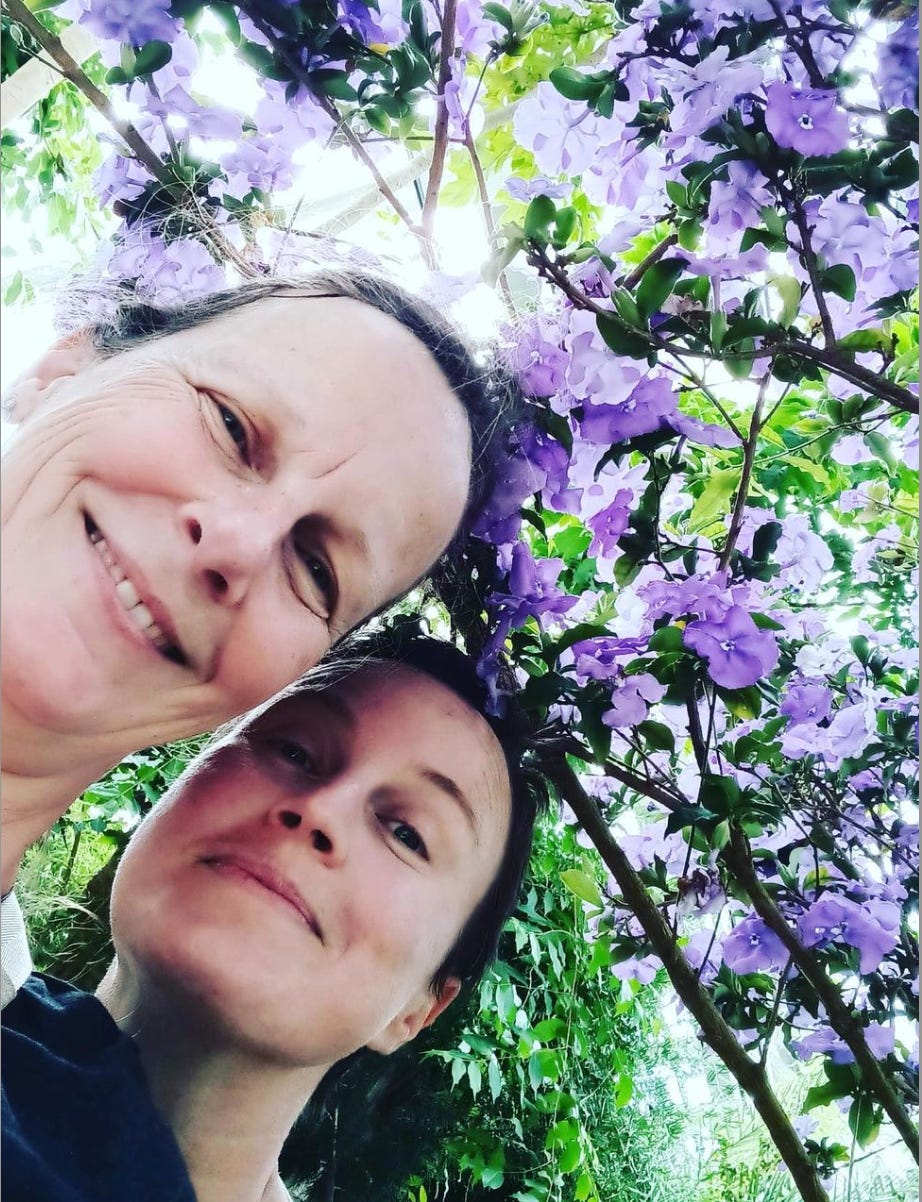
Gerda, my au pair from childhood, was still on her way. Her name means “Guardian.” She lived in Germany, so took a drive, then a bus from Lübeck to downtown Copenhagen. Then she would walk from the bus stop to the hostel, arriving late that night. I prepared by going to the nearest store. I tried to buy items by reading ingredients in Danish that avoided cognates to “milk” and “gluten” or “wheat,” but felt confused so asked for help from another friendly, English-speaking clerk and took home a handful of groceries. Gluten-free bread and pasta, sauce, sliced meat, dairy-free butter (which ended up being cottage cheese…oops), and a salad kit with some olive oil and vinegar for dressing. I returned home. Unpacked the groceries, laughed at my dairy mistake, and rested once again until my former nanny arrived.
Gerda showed up at our front door when I was just two and a half or three years old. I was shy as could be, she told me. Always hiding behind my mother’s knees. I could barely speak. My older brother struggled with a stutter. Both clues that abuse was happening, but no one noticed. Or if they did, they said nothing.
Gerda was a wild being. Only 18, living in the United States, nannying for families for a little money and free room and board as she explored the country. She helped my mother with my brothers and me, while my father traveled to build what he called, “His empire.” She introduced us to Nutella. She partied on the weekends, sneaking in late to sleep in the guest room downstairs. She sunbathed outside, once on the beach topless where she almost got a ticket. When Gerda wasn’t with us, she dated who she wanted, and traveled where she wanted. She was free and I infinitely curious about the type of woman she could be. Some say,
“You can’t be what you can’t see.”
I saw her and she saw me. Her life opened my future into more possibilities. I started dreaming differently in her company.
Gerda had nannied for my family for a little while, then followed a love to Hawaii where she worked in a German bakery. We all stayed connected, and if she was ever near California, she would come back to visit. Forever she remained a second mother. The one across the ocean, no matter which ocean it was. Always there, just out of reach. Her parents passed away and when it was time to get married, my parents filled in the gap. She flew out to California. We took her shopping for her wedding dress. My parents bought it for her. Months later we flew to Germany to attend the wedding.
Gerda and her future husband were living in sin according to my Catholic family on a farm passed down to her. Huge circles of hay stacked in the shape of two massive humans stood in front of the barn. One dressed as a bride, the other a groom. A line hung from both sides with baby clothes pinned and waving in the wind. Horses ran behind an electric fence.
The weekend was full of festivities leading up to the wedding. A few parties including the German tradition of porcelain shattering for good luck: old sinks and toilets and dishware chucked over and over again against a large cement wall until it all blasted into a million little pieces. Then we stood in a circle, Gerda’s bra was stripped off, as were her partner’s jeans. Then both items were thrown into the center, soaked in lighter fluid, and lit up in flames. A symbol apparently that from now on Gerda would wear the pants in the relationship. The whole show was quite a sight to see, as I stood in the back now too big to hide behind my mother’s knees, and observed cautiously. The day of the wedding, I walked down the aisle as the oldest flower girl in history at 12 years old. Then Gerda followed me.
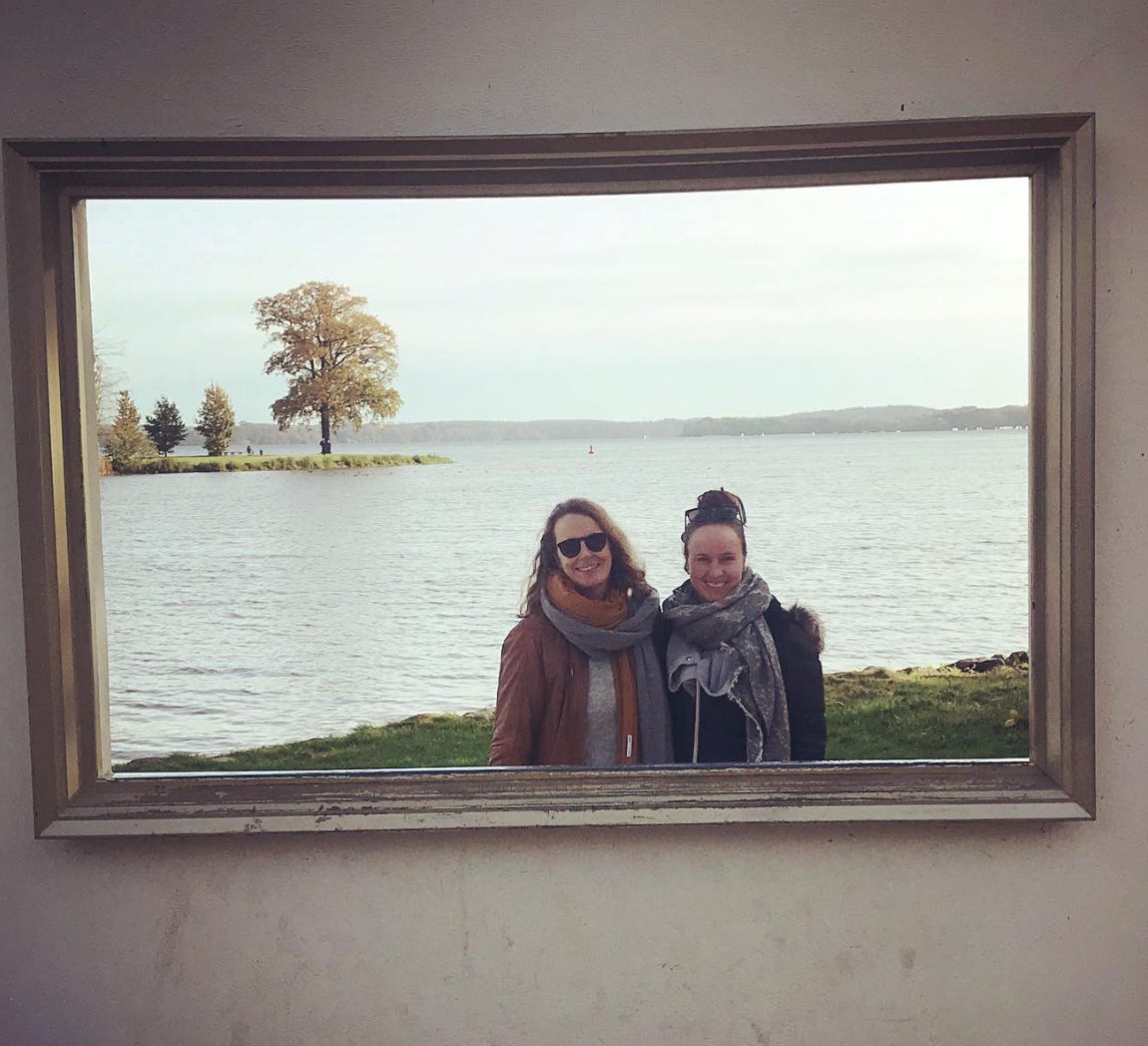
A few years before this day I was to meet my guardian in Copenhagen, I had followed Gerda to Germany. After I had lost nearly everything and everyone, she stayed with me. At 24, when I had disclosed that I had been incested by a number of men in my family, my community reacted in a number of ways. Some stayed silent. Some refused to hear about it. My first love said, “Fathers don’t do that to their daughters,” and never spoke to me again. Some called me crazy. Some said, “My story didn’t add up.” Others said, “I was emotionally raped, not actually raped.” My mother said, “I believe you, but you must forgive them.” Some said, “It happened to me too, but there’s nothing we can do. God wants the family to stay together.”
Every cell in my body told me to run like hell from the silence and dismissal and denial and normalization and spiritualization of this intergenerational issue. I was criticized by nearly everyone for leaving. Held responsible for the pain and shame my decisions made the family feel. In their absence, a gap that felt as wide as the distance between Dubrovnik and Copenhagen sat vacant in my body. As perilous as the space between the subway and the platform. I was unsafe with my family, but also without them, and desperately lonely.
I never knew if I’d fall through the cracks of The Incest Gap: the lack of safe methods of incest prevention, intervention, recovery, and justice that keep children vulnerable to sexual abuse in their homes, force survivors and families to stay isolated in healing, and fail to end recidivism by people who harm. I left my family with nothing and no safe place to land. I had no idea if I would stand on a stabler base on the other side, while my brain, body, and being unraveled and kept me from functioning.
Just when I thought I lost everyone including myself, Gerda wrote and invited me to come see her. Apparently, the news of my departure from family and my reasoning had traveled across the sea. I told her I would visit Germany when I could and waited for the time when my health and finances lined up just right. It took years, but finally they did. When I lived in Seattle, an airline created a new flight path to London and charged less than $400 round trip. The hopper flight to Hamburg cost less than $50. So I saved up, stayed in London for a few days at a cheap hostel, then flew to Germany where Gerda picked me up.
We explored Hamburg, then found our way to a bar underground with brick walls and beer and charcuterie. She sat me down and immediately said,
“I’m sorry. I’m sorry I didn’t protect you.”
“Your family was always different, especially to me coming from Europe, your father forever bossy, but I didn’t know he was doing that. I wish I could’ve done more.” I cried as she became the only person from those years to take my side. To validate the dysfunction of my family system. The only one to support me. When everyone else criticized my story, she believed me. When everyone else refused to understand my need for safety and separation, she met me with an apology and an invitation.
Then we returned to that same farm where her wedding had been celebrated nearly twenty years before and I met her two sons, John and Hannes (which is short for Johann, “John” in German), now nearly adults. They knew me to be her only daughter and their sister. The one who lived across the ocean. Then Gerda and I daydreamed together about our next visit and discussed Copenhagen as a great destination.
Gerda arrived to the coral hostel with white window sills in Copenhagen at 11:59 at night. I opened the door and wrapped my arms around the wild woman, the former guardian, and held her for the first time in a long time. Now, nearly five years since our last visit, our dream to meet in Denmark was finally realized. I don’t usually share rooms with people overnight to protect the reactivity of my brain from fight or flight, but my body knew she would be different. My body knew she would be safe. We had a secure attachment from all those years ago and that foundation remained in my memory.
Studies have shown that children recover best from abuse throughout development when they have buffers: people or places or pets who model to them what love and care should have been, what it can be. Those who create a juxtaposition against the abuse, corrective experiences to show that there is another way, another world, another space to be treated with respect and dignity. Gerda, in her wildness, in her freedom, in her second mothering across the ocean, in her invitation, and in her apology, had been then and still was my buffer. She filled the gap in my life and family and home and heart to help them all heal from the devastation of incest and abandonment.
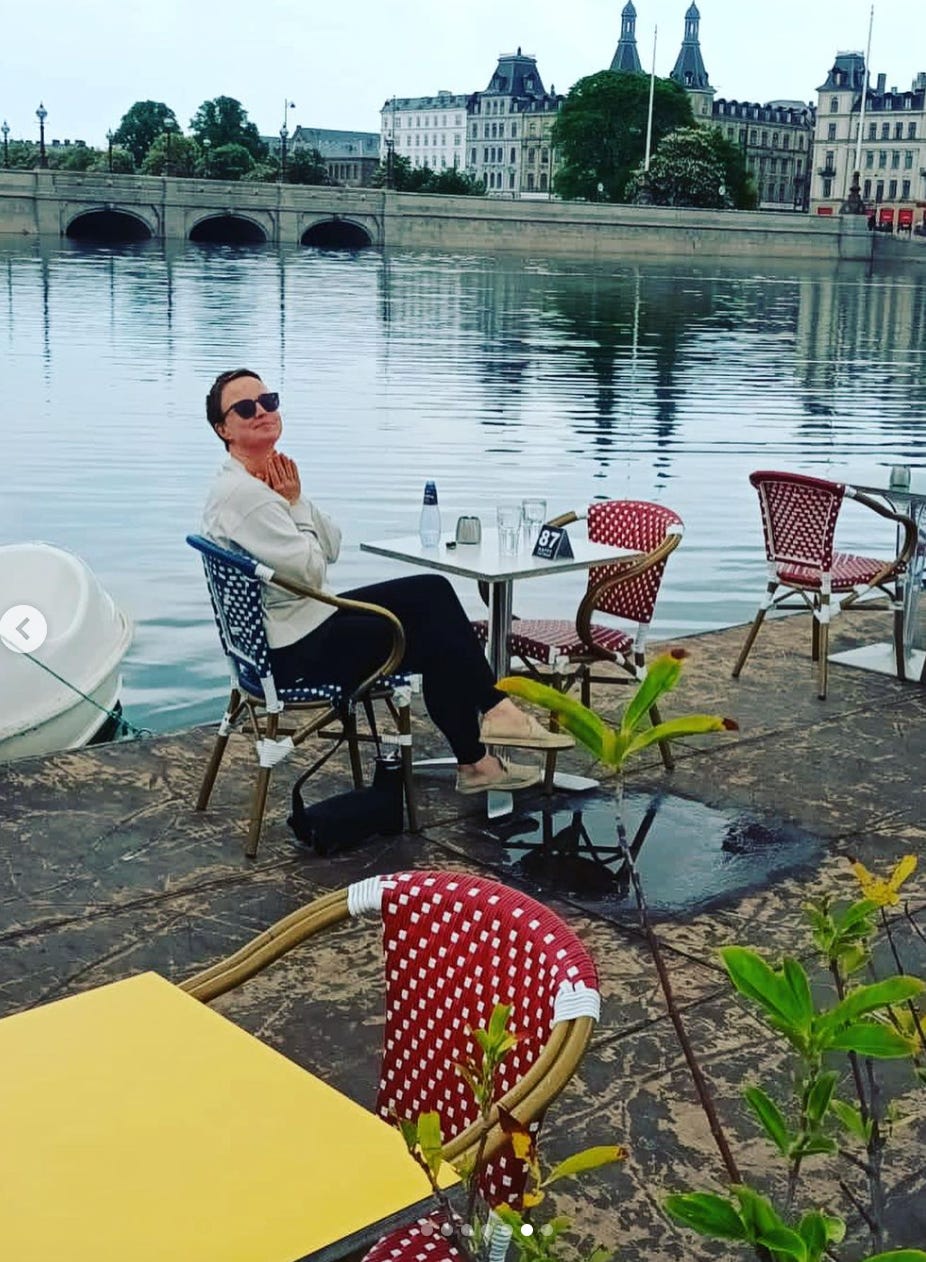
The next day we went for a walk. We sat on a dock on the river, the water now holding us up, no longer separating us. We waved to and fro as we enjoyed some toast and fruit and other Danish delicacies for brunch on the sunny day. She reflected to me,
“Look at the beautiful life you have created for yourself.”
She felt impressed by the minimalism of my existence, the deep support I found in friendship, the freedom I had to travel with my home on my back and bills paid through remote creative projects. With me now, she was here not just to witness my pain, but to celebrate my joy. My arrival after breaking the chains of intergenerational incest by hopping off of my family’s train, minding the gap between, and landing on some unknown platform in an unfamiliar reality. Now wobbly, I felt insecure about my ability to sustain the freedom I had finally found. Anxiety flooded me, while Gerda, my guardian, sat there and encouraged me.
“I have always followed your example,” I reflected back to her. “Seeking to be free and to travel. To be wild in my own way.”
“I hope,” she continued. “That as you find success, your life stays as simple as it is now.”
I loved this reminder from my second mother. Not just her confidence that I would stabilize in this new world and find some sense of surprising satiation, but also an invitation to stay grounded and simple and free. To not get caught up in the pageantry of success, especially shiny in the US economy. To stay rooted in liberation and community, equity and intimacy. The guardian of my past sat with me in the present and offered me protective guidance for the future I could not yet see.
For three days we explored gardens and cafes and spoke of our wild ways. Before we departed, she gifted me a big, brown sweatshirt with “Kopenhagen” written on it with a “K.” The German way. So even from a distance, even across an ocean, even in that large gap that sat between Schleswig-Holstein and New York City, I would always feel her holding me, guarding me, guiding me, celebrating me. Being the buffer who I wish I never needed, but am so grateful that I have.
It was time for Gerda to return to Germany. So I walked her to her bus stop, hugged her goodbye for now, and went back on the subway. I effortlessly jumped the gap, landed on the platform, followed those steep steps back to that beautiful path and stared in awe at that field of grass and dandelions on the way to the hostel where I’d stay another two weeks. I picked one up, placed it to my lips, and blew a wish: “For the safety of all children and, until then, for more guardians like Gerda to fill in the space between abuse and freedom.”
I love this story for so many reasons. Filling that gap is so essential. I am so glad that you were able to receive that support from Gerda and take the time to reconnect in such a meaningful way.