
This post discusses incest abuse. If you’re a survivor or supporter seeking resources, head over to Incest AWARE or Sibling Sexual Trauma.
I didn’t have a disability on vacation in my imagination. I prepared for the journey by conjuring visions of myself traveling place to place effortlessly, enjoying a companion’s company, sleeping through the night endlessly, arising rested, eating copiously. But then I arrived and was hit with a quick reality check. A stark reminder that when I travel, I take myself with me. And I, as always, am wobbly.
Neurofatigue
I was headed to Costa Rica. Taking a red eye from Portland to Dallas, then waiting for a few hours before I flew to Liberia. Usually, I wouldn’t have chosen an overnight flight nor one with a layover, as every step, every stop increased the risk of neurofatigue — brain tiredness. It affects people with Traumatic Brain Injuries (TBI), as well as those with Complex-PTSD, and presents differently in everybody.
For me, it causes the feeling like my brain is spinning in my head. It triggers depression, emotional dysregulation. I go from 0 to 10 too fast, blast out of my window of tolerance, emotionally spike for minor inconveniences. At best, neurofatigue ignites my inner screamer. That two year old still trapped in my body desperate for a way out. The part of me that compartmentalized from my adult self after a childhood of incest and illness. The one without words and a body aching to be safe.
At worst, neurofatigue causes me to question my own identity, the purpose of my reality, the possibility of a future for me. An all too familiar existential dread that triggers suicidality. A common occurrence for incest survivors like me.
Neuroplasticity
But my brain has been getting better due to neuroplasticity — it can change with time and work and new experiences. Acknowledging my inner screamer helps me to set boundaries to keep her feeling safer. Today I can anticipate environments or people that might trigger her and prepare better or stay away. Lately, I’ve been playing with the boundaries of her constraints. Trying a life of flight — receiving the medicine of movement.
The flight best for my budget to get to Costa Rica was a red eye and had a layover. Often forced to compromise mental wellness for budget, I took the risk. I prepared my brain all day for the journey to help manage anxiety. Planned places of rest to avoid my brain getting too stressed. I searched Google photos to provide images of my destinations. Practiced visualization. The less unexpected happenings the better. But there was so much I couldn’t anticipate. Often traveling between Point A and Point B required a lot of waiting.
Default Mode Network
Waiting continued to be one of the most difficult spaces for me to regulate. People with PTSD often manage an overactive Default Mode Network (DMN) — the brain’s state at rest. What it does when the body’s doing nothing else. Introspection, rumination, processing the past, envisioning the future, and postulation on the perceptions of others all fill the space between focused activities.
My brain defaults to a foundation of self-identity built by childhood incest and illness: triggers, self-deprecation, anxiety, concerns about what other people think of me, terror from the past, fear of the future. Sitting with myself is not a safe place to be. Often the brains of incest survivors never learn to differentiate between danger and safety.
The best tool I’ve found to manage my overactive, and frankly mean, DMN is distraction. Keep my brain engaged in something interesting or inspiring. Keep my body moving. Travel is my favorite medicine. It leaves me in a perpetual state of awe, so my DMN can’t take over. It overrides my mind just enough to enjoy my life.
But using movement as medicine isn’t without its complexities. There are side effects. Travel can also flood the brain with so much unfamiliarity or stimulation that it feels unsafe, which can trigger the body’s Sympathetic Nervous System (SNS), the part that jumps into a fight or prepares for flight, or, the Parasympathetic Nervous System (PNS), which leads to freeze. In instances like these, the brain begins to time travel back into memories of trauma — the type of travel I don’t like. Making the body feel like it’s not just recalling the past, but that the pain is actually happening presently.
When my brain feels unsafe it revisits years of seizures, surgeries, and sexual violence. The pressure builds in my body. My inner screamer ignites. And suddenly I’m managing the feelings of incest and illness while standing solo in the airport line just staring at a sign waiting for my plane to arrive.
Debilitation
This travel day though proved to be surprisingly simple. Due to the late night flight, Portland’s airport was nearly empty. No long lines. I flew through security. Boarded the plane. Both seats next to me open. The big steel box took off and I laid down and slept.
I awoke to the announcement that the plane was landing. I left, found an elongated seat, threw a blanket over my body to try and create some sense of safety, and continued to rest. It can be difficult to track progress of recovery with Complex-PTSD. But in this case, it was becoming clear to me.
My disabilities used to debilitate me. I felt crushed by the weight of my history, then the weight of unprocessed memory, then the weight of recovery, then the weight of activism and justice to ensure it didn’t happen to other children. Often, I felt so tired from it all I could hardly move. I lost everything I knew to save my own life. Even just a few years ago a sleepless night would have kept me from functioning. Resting in public would have challenged my sense of safety, keeping me hypervigilant. A layover flight would have been too much to take. Yet this day felt surprisingly safe.
I breathed into my body and whispered internally, “Thank you for healing.” The expansion of my dreams to be a full time nomad expanding a little more easily.
Movement
With a little sleep, my brain had more energy than I anticipated. I found my driver who would accompany me and a number of other tourists to our next destination near the beach. For the next hour, I stared out the window and reminisced.
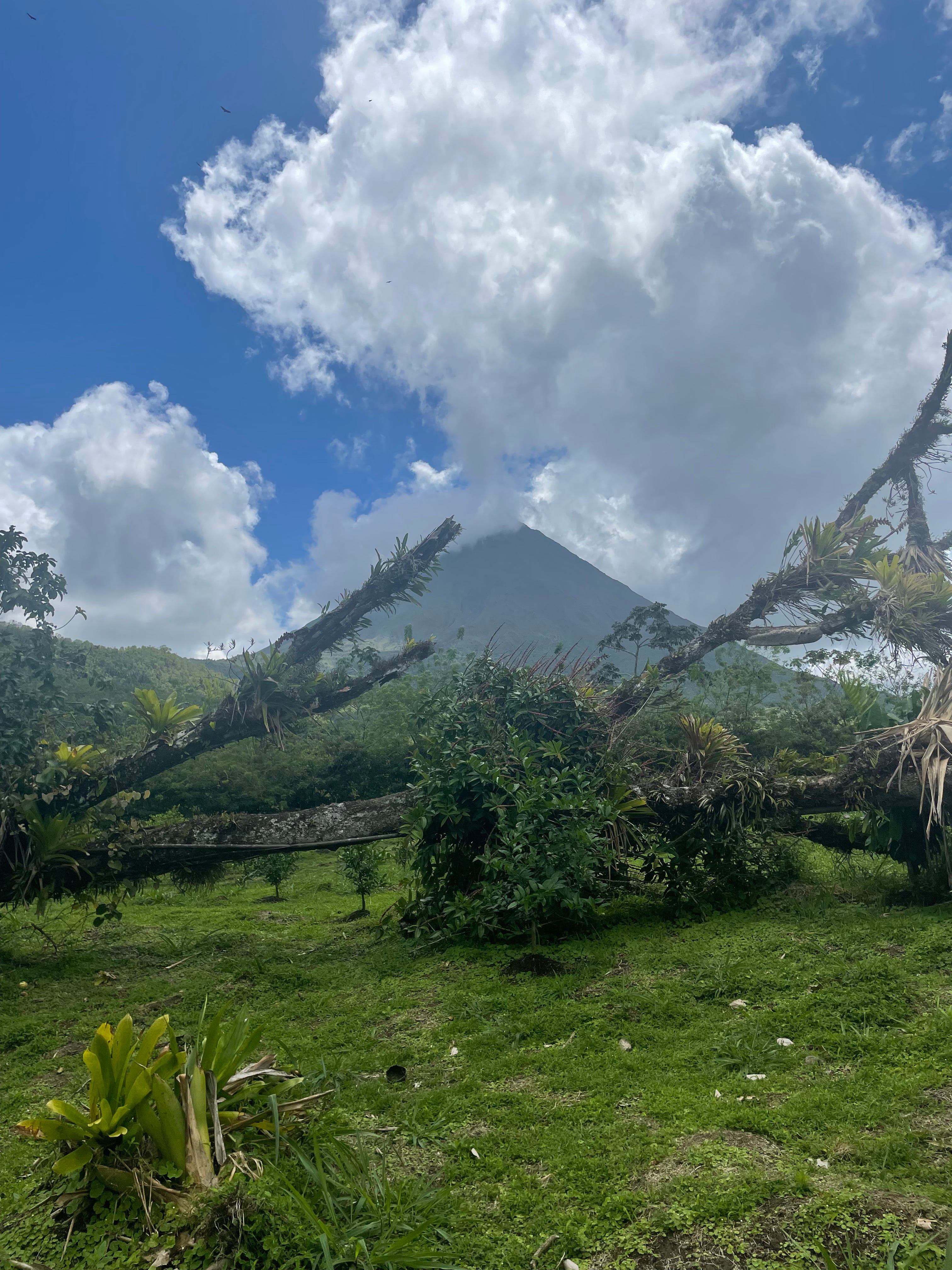
I watched as the mountains rose before me. The expansive greenery leaping as we rode. The clouds gently shifting while we moved. Rays of the sun running alongside us. While memories moved inside me. This time not triggers but glimmers. Those moments that filled me with happiness. Hope. Joy. Delight. Pleasure. Peace. The instances that kept me fighting, and freeing, and feeling the past so I could heal to hold a safer future. About my last time in Central America. Specifically, El Salvador. Back when I was still seeking salvation. From a pain just beginning to arise in me. From a hidden history still buried beneath my body. A home I found in the place called, “The Savior.”
And now. Here I was. Sitting by this window, in the bus, on the way to meet a dear friend in Costa Rica. Reflecting about the beginning of my journey of self-salvation on my first trip celebrating that I may have just achieved it. I wanted to see the world. To feel the world. To know the world. To share the world through written word. And here I was. Circling back to Central America to do just that.
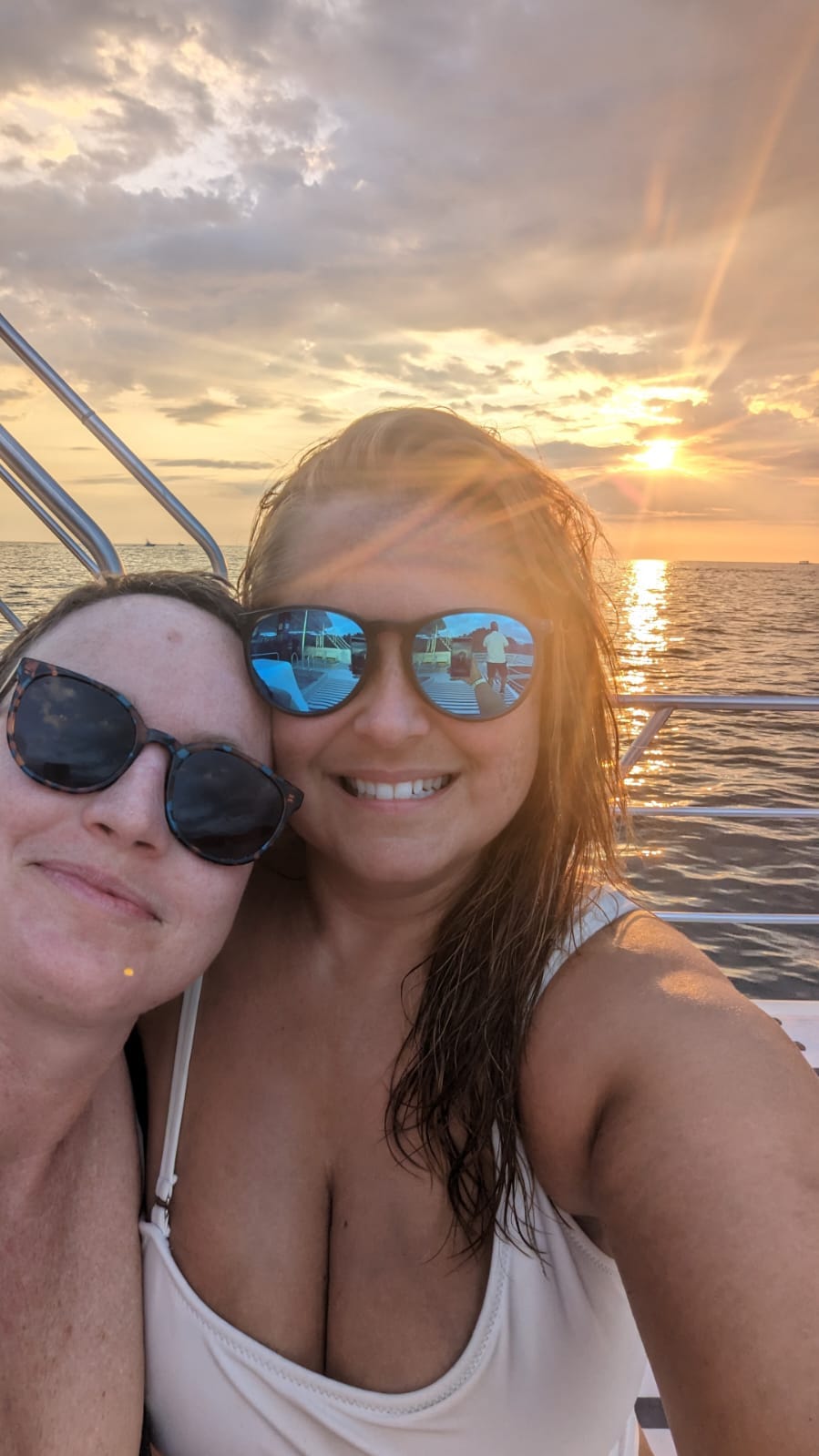
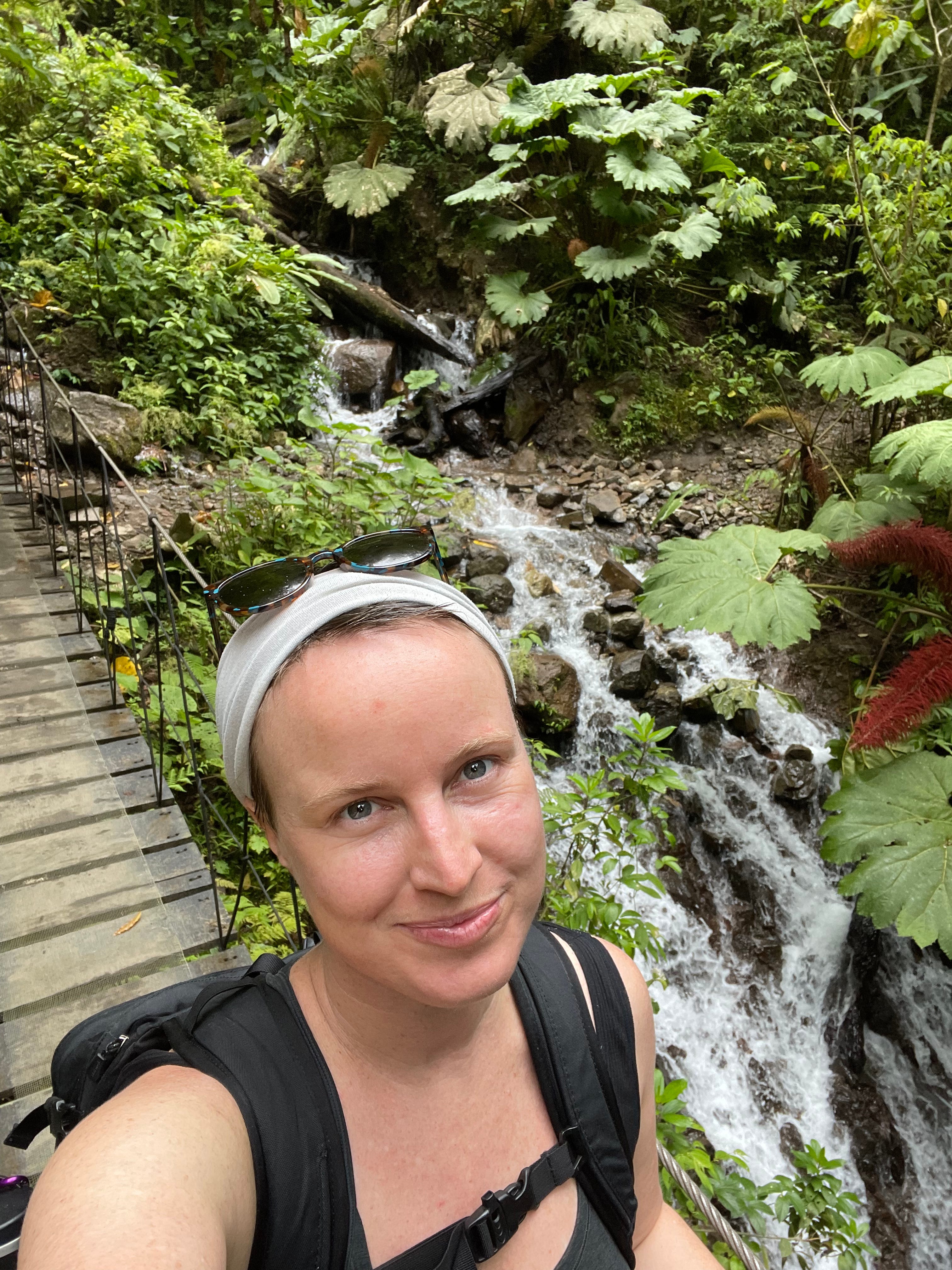
I arrived and met my friend, Monica. Monica means, “Truth,” and she has always been someone who brings me closer to mine. For the next two weeks, we found the sand between our toes, and shish kabobs made on the streets getting stuck in our teeth, and late nights chatting with oldies music planning in the background. We drove on long car rides with potholes and poorly paved roads. We hiked and chased waterfalls. We shared meals. We soared on gondolas to reach the tops of mountains. We walked through tree bridges. We tubed down rivers. On the outside I was entirely free, but my insides still told a different story.
My being felt a deep sense of relief. Like I had finally arrived to a life worth living. But my disability still followed me. My body and brain causing a distracting amount of reactivity. Accustomed to spending so much time solo to manage my busy brain, the constancy of a friend felt unfamiliar. Everything had to be communicated, compromised, co-regulated. Sharing company all day still didn’t feel entirely available to me.
We did travel place to place just not effortlessly. I did enjoy my companion’s company mostly. I slept through the night okay most days. I don’t think I ever feel rested when I rise. I ate just enough to feel satiated with symptoms.
But through it all I felt wobbly. My neurofatigue triggering. My DMN desiring more space. My moods oscillating between peace and pleasure to depression and anxiety. I felt angry. I had worked so hard to get better. I had higher expectations for my feelings on vacation. Like I should be happy. I scolded myself:
How could you still feel this bad when your life was suddenly so good?
Ontology
Then we found ourselves in a butterfly sanctuary where I watched a newborn fall out of the cocoon. Wet, drenched, dripping. It also needed time to adjust to the unfamiliar. Its entirely new shape. Having wings. Being able to fly so suddenly. But not before its wings dried. Not before it took a few minutes to understand its new body and life. Its new way of being.
Developmental trauma didn’t just change my neurology, psychology, and physiology. It changed my ontology — the nature of my being. The incest and illness transformed the way I am in the world. My very sense of existence. How I relate to myself, to others. How I shape a worldview. How I call myself. Survivor. So few survivors are public with their stories. Without community, it’s been difficult to find a language for this strange experience, mentorship impossible.
I could never not be survivor. I could never take back my past and become something else. I could never reclaim who I would’ve been if the incest and the illness wouldn’t have happened. But I could choose to become someone new. And the butterflies modeled to me exactly what to do. Metamorphosis. A form once entirely grounded, turned to mush, then recreated itself to make a new shape. A nascent way of being in the world. A rebirth. Inviting a life of flight.
But some of them too stayed with their cocoon. They had a hard time letting go of the familiarity of home — that safe but limited place. Others left nearly immediately and walked around a bit as their wings found their lightness.
If the serial rape shaped my foundation and determined my steps the first third of my life, then healing was inviting me into a brand new place. An entirely new life. But this butterfly transition was a real bitch. Trying to stitch the past, the present, and the future all together in a way that worked within one body, brain, and being deeply split. The temptation was to turn around. To ground. To return to what I knew. I had one rule when I walked away from home all those years ago:
No matter what happens, I can’t go back.
Butterflies only live a few days to a few weeks, so the fact that they had no sense of urgency in their nascency moved me. Suddenly life felt so very precious to me and I wanted to leap from any sense of familiarity and launch into flight immediately. But like them, I was not ready. I was not steady. Still wet, drenched, dripping from the tears and fears and the long list of lives left behind in trying to find this life.
Suddenly then, I was reminded that no matter where I am my brain will tire too soon, and talk too much. My moods will oscillate. But still I can be grateful that my disability is no longer debilitating me. That I am free to be here, even if I’m still learning to feel good about it. Like the butterflies, I knew that one day I too would take the leap and enjoy a life of flight. For now, I just needed more time to dry. Besides, if I were going to be symptomatic no matter my location, might as well be in a shitty mood in Costa Rica.
Subscribers, head over to the chat to join the RoadHEAD community and ask questions or answer them! Share your own experiences on the road, your journey with mental health, or anything else.
