
Listen to the story read by Jo. or read below. This post references incest abuse. If you’re a survivor or supporter seeking resources, head over to Incest AWARE or Sibling Sexual Trauma.
Thank you to everyone who invited me to share their stories in this piece, as well as Maria Socolof of 5WAVES for her incest-inclusivity review and Dr. Ethan Levine for his sensitivity review.
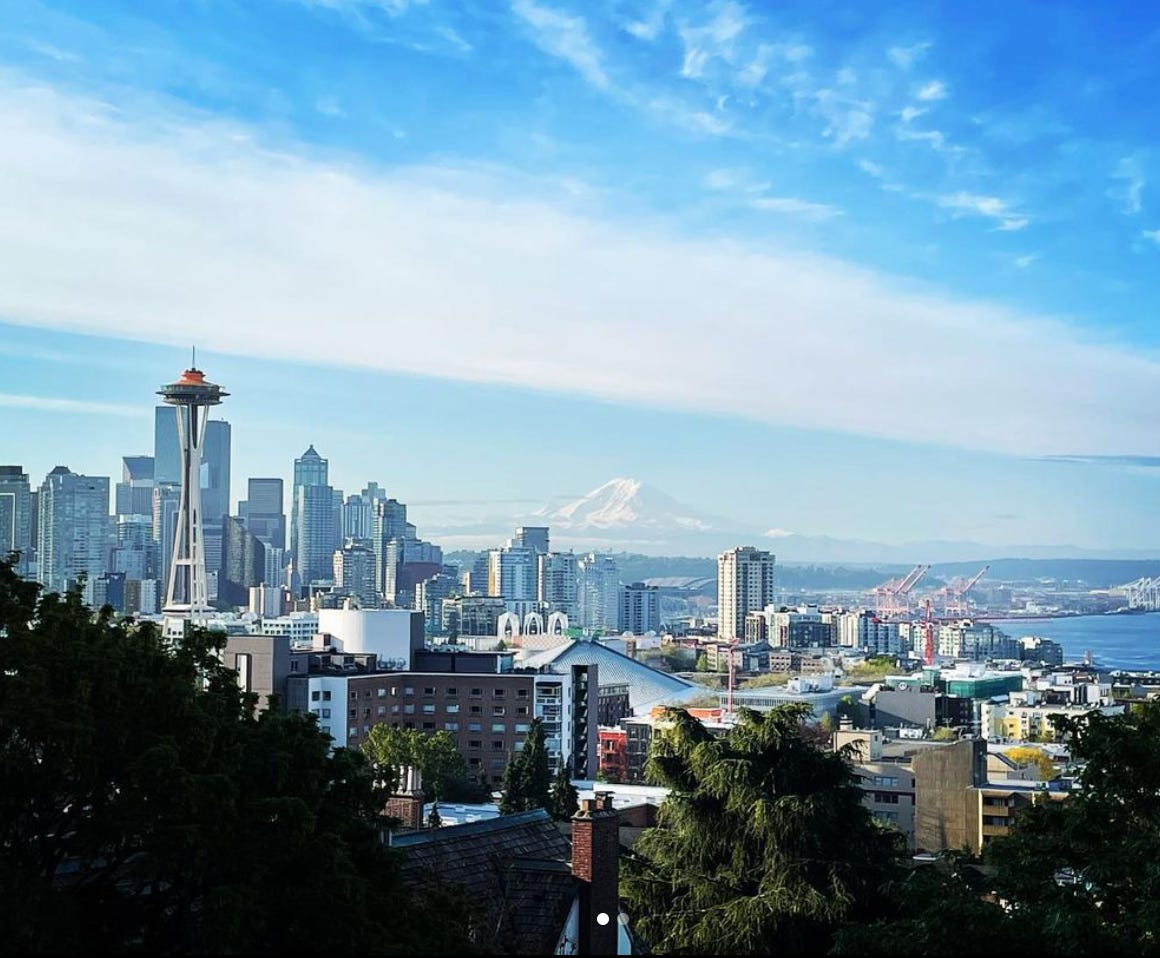
I arrived to Seattle with invitations from previous generations and the generosity of a friend, after a leap of faith. Robin, my best friend now but new friend at the time, offered to drive me from the San Francisco Bay to the Emerald City, as long as we could stop by Idaho to see her sister on the way. The name Robin means, “Famed, bright, and shining.” And she is, and she does.
Thanks to a friend of a former employer, I had a room to stay. But no job, no idea how I would earn income. Still Seattle called to me. Not with clarity, but with opportunity from community. A summons from older incest survivors to join their complimentary retreats and recovery groups. So I said, Yes.
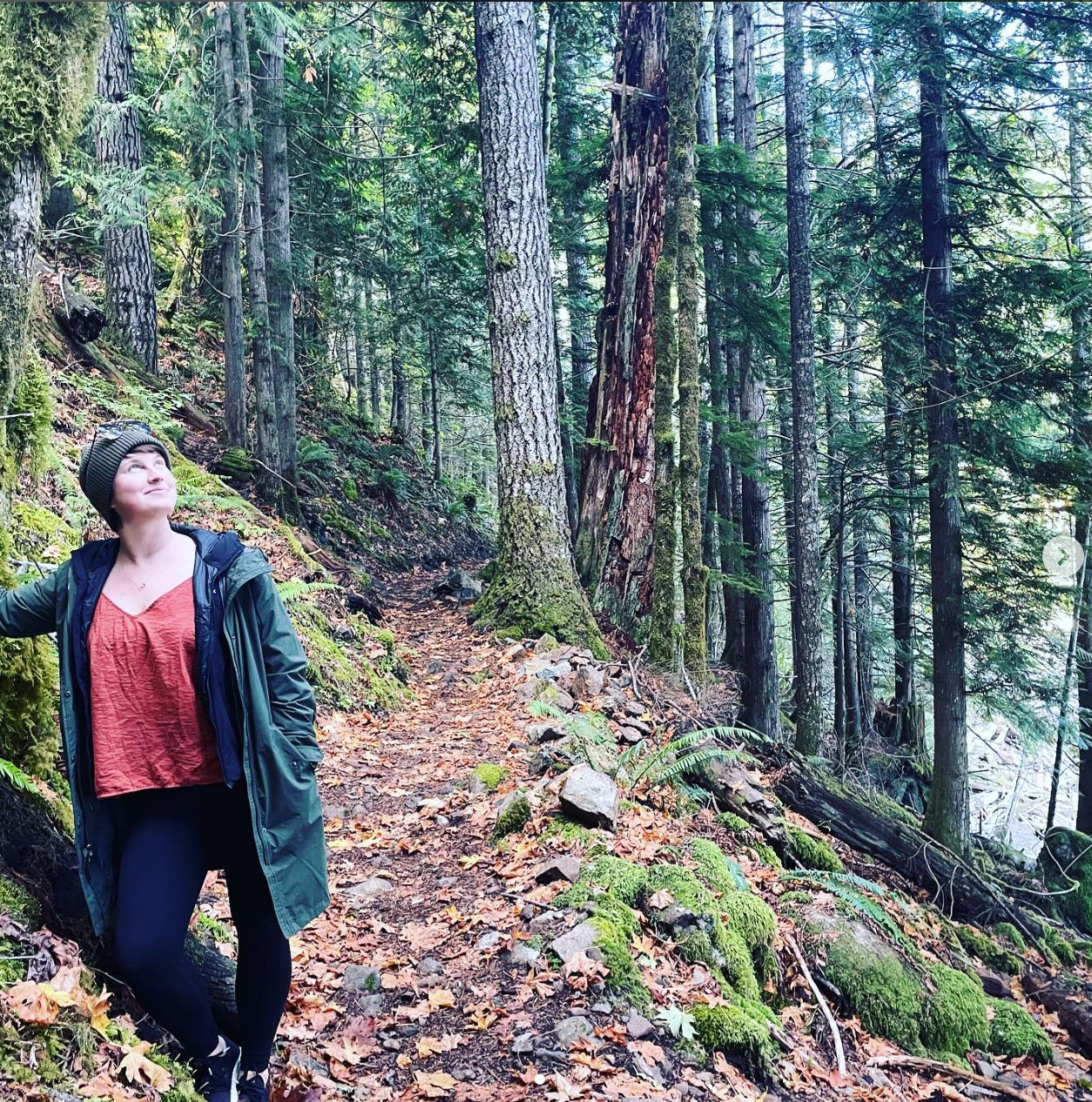
Quickly, I fell in love with the land due to its mountains, its moss, and its memories. Walking through my new neighborhood, I viewed the Cascading peaks to the East, the Olympic giants to the West, Mount Baker to the North, and that towering volcano Rainier to the South. “The mountain’s out!” I joined the chorus of Seattlites celebrating when we saw the steady summit stretch up beyond the clouds. Those mountains held me like a hug, as I explored my newest home and continued my healing journey.
The trees too surrounded me, covered in interdependency. The deep green moss that clung to their trunks helped them to hold water, while the bark provided crevices to let the lives of moss breathe in the spaces between.
I recovered the memories of Seattle more gradually. Slowly, I learned its history, especially the stories of women whose bravery built the city. The Coast Salish peoples, specifically the Suquamish and Duwamish nations, first cared for the earth and each other through intimate relations with the soil and sea, as well as extensive trade networks that connected communities. Then they survived the attempted genocide by European white colonizers in 1851 who quickly cut down the trees, stripped them of their moss, chopped them up piece by piece, and sold them as lumber to construct the local city, which they first called “New York.”
In this lumber town, white men outnumbered women nine to one. Consensual interracial relationships, as well as colonialist sexual violence became common. As couples bore the next generation of children, many of the white men sexually abused the youth or forced them into marriage. As white culture came to reign, interracial relations first grew to be taboo, then became illegal.
Institutionalized sex work started in Seattle with Mary Conklin, also known as “Madame Damnable,” who opened a brothel around 1853. Then a San Franciscan named John Pinnell recruited (by choice or by force) Native women, then unemployed dancehall girls from the brothel district of his hometown.
After the Civil War, Asa Mercer traveled to New England to import those who came to be called the “Mercer Girls” to Seattle. He recruited from the spinsters, the widowed women, the eligible bachelorettes without men to marry, as well as the orphans, who were left vulnerable after the war. Many arrived to become wives and school teachers. Other working women sought jobs as seamstresses, maids, and consensual sex workers to benefit from the economically burgeoning West. While even more, especially women of color, were trafficked in all areas of labor in the region. Together, the female Seattlites began to fight for their rights and by 1884 Washington became the first state to win the vote, for white women at least.
Sometime in between, Elise Oben arrived to Seattle’s streets from Germany by way of New York. Rebranded as “Lou Graham,” a name that sounds more like a man’s, she built a real estate empire both in and outside of the brothel district. Her employees — including people of all races, genders, and sexual identities — earned 10 times the wages of women in other professions.
Papers printed stories of Lou’s diamonds and dresses, as well as her charity. One account celebrated the time she paid the legal fees for a woman who killed her abusive husband in an act of self-defense. Another article boasted of her care for orphans who ran away from unsafe family systems. In 1889, a fire swept through Seattle burning most of the city down to the ground. Then Lou, in her generosity, helped the town to pay to rebuild on top of the ashes through loans and tax dollars earned by the bodies of her sex workers.
Around the same time, an international movement called “The White Slave Panic” came to Seattle insisting that white women could never consent to sex work for income. So instead, they must have been sold into the trade by racially marginalized human traffickers. And so began the salvation of white women sex workers — whether they engaged in the labor consensually, circumstantially, or coercively — and the criminalization of people of color participating in the sex trade with the same motivations.
Today, some forms of consensual sex work are legal in Seattle such as stripping, while other types remain illegal. Consensual sex workers still fight for their rights to decriminalize their preferred or chosen forms of employment in the region. Likewise, women’s leadership, such as Lou’s, continues as Seattle has been voted one of the best cities in the US for female-owned businesses. However, it also remains a network for human trafficking and child sexual trauma.
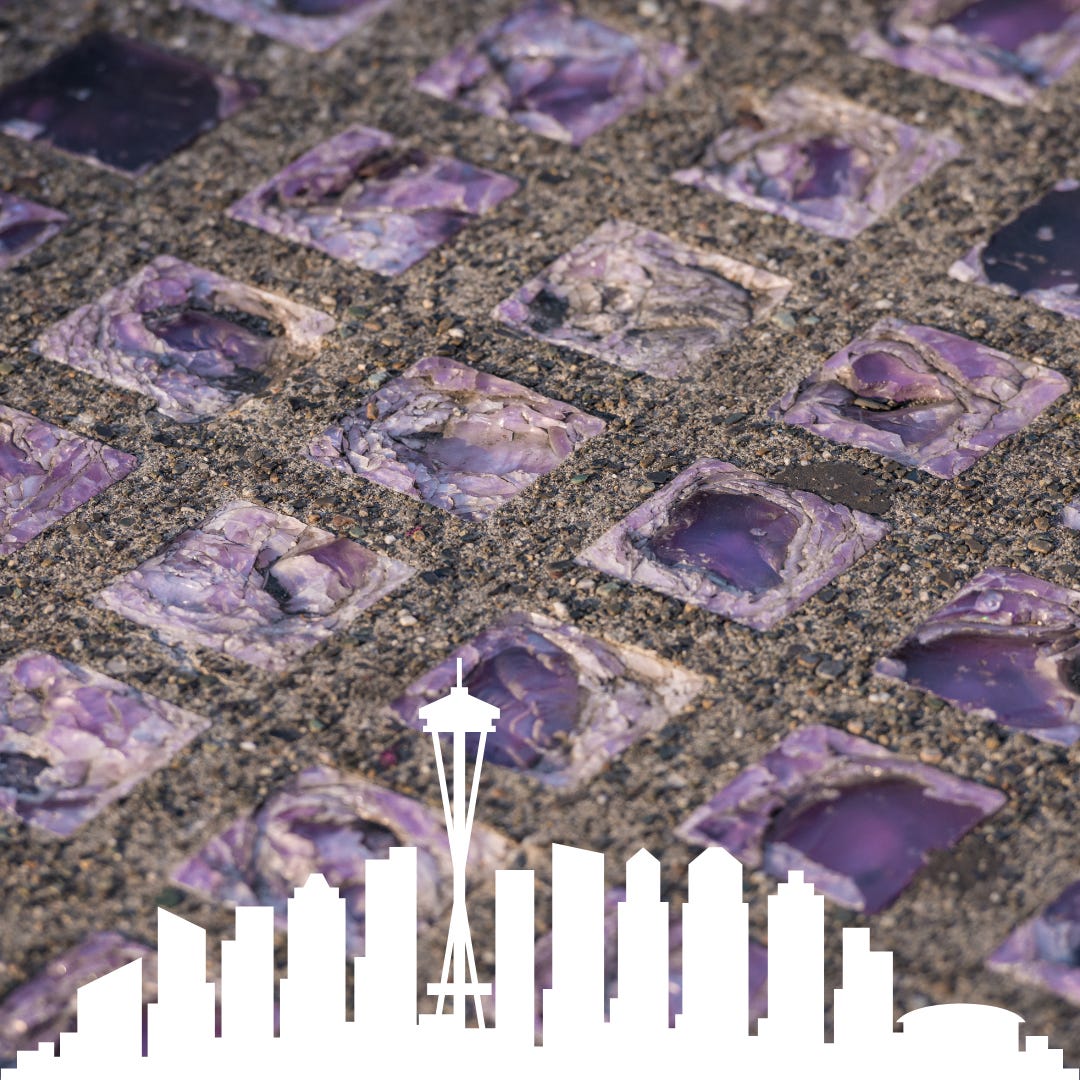
Now, I walked atop the sidewalks of this city and peered down into the purple glass windows cut into the streets that revealed the remains of the burned history just below. I attended the popular tourist attraction for locals and visitors alike that invites those curious about the underground city to walk down there for a fee, which is how I learned about this bit of Seattle’s history and felt it so deeply in my body.
Incest abuse connects to all other types of sexual violence, but mirrors sexual violence in trafficking and employment particularly closely as the victim’s provider/s and perpetrator/s are often the same. Besides the symptoms of shame and silence for survival, a sense of self and safety separate from the provider and perpetrator can be difficult for victims to find. As an incest abuse survivor, I felt in awe of the beings and bodies whose capital contributed to the formation of these fixtures through consensual sex work, as well as human trafficking and sexual abuse. I too needed to rebuild my own life after losing everything and wondered:
Could I ever be in awe of me?
Seattle continued to teach me through the legacy of female friends who first introduced me to the safety of constancy. The ones who held me like the mountains, who shared with me the joys of interdependency like the moss on the trees, who helped me to explore the memories of love deeper than the instances of incest.
First, I met Amanda. Amanda means, “Worthy of love.” She taught me how much I was when she first opened the door to her restaurant, The Guest House, and invited me in. We became instant friends after a quick conversation followed by a coffee. When I shared my work as an anti-incest activist, she disclosed how that same sin had touched previous generations in her own family.
Then I ran into Rachel. Rachel means, “Ewe,” and female sheep, according to one animist tradition, reflect purity and abundance. And she did. I found her through a hiking group on Facebook. Those surrounding peaks in the North and the South and the East and the West called for me to climb them, but they sat so far away and I had no way to get there. Rachel, with her glowing ginger skin and bright red hair, agreed to drive me with enthusiasm and generosity.
Then I joined Jennifer in the woods. Jennifer means, “Fair one,” and she is. Both in her face and place in the world as someone who cares deeply about justice and equity. She and her son, Atticus, met my nanny kiddos and me between the trees during Forest School. The little ones played through the moss-covered trunks, while she and I nurtured that same level of interdependency.
Then I met Mahina. Mahina is Hawaiian for, “Moon.” And she glowed through those dark times. We also intersected at The Guest House, where I opened the door to see her standing behind the counter waiting to welcome me in. Months later, I met her behind that same service stand, becoming not just Amanda’s friend, but her employee. Not just Mahina’s mate, but her colleague, as I learned how to serve guests, and bus tables, and make lattes for brunch on Saturdays and Sundays.
Then Alex arrived into my life. Alexandra means, “One who came to save warriors.” And she did so by helping me to get unstuck from limiting identities. Strong, confident, and queer, Alex couldn’t care what people thought of her. She taught me to be the same, as I explored new reasons for living beyond the pains of an incest survivor exiled from family and a sick subject exploring healing modalities.
Then Shirkydra shook me from debilitating anxiety. Kydra means, “Bold power,” which she showed me immediately when we met for dinner. Instantly, I knew her to be the strongest person I had ever seen. She had no time for my doubts, and instead inspired liberty by encouraging me to advocate for the safety I wanted both for my community and me.
Then Claire and COVID came into my life nearly at the exact same time. Claire means, “Clear,” and her focused commitment to care for the community inspired me to work for her cafe after I moved away from The Guest House. When COVID came, Claire kept the cafe open so that those in isolation could come in for a warm drink and a quick chat, as long as they stayed six feet away and kept masks on their faces. She and I worked tirelessly together to keep the place alive and the community’s needs met through those first months of the pandemic.
Then I found Faith. Faith means, “Trust,” which we began building first from the wall in Queen Anne where we met walking after a beautiful snow fall. “Wowzers,” she celebrated as we both gazed into the glowing sun reflecting off of the blue hued water of the Sound, “What a beautiful day!” “Right?!” I replied, falling in love with this friend for the very first time and hoping she’d stay forever in my life. The faith that first called me to Seattle felt embodied in this friend with the very same name.
Then Faith introduced me to Alicia who lived in walking distance. We spoke so openly of our strategies for mental health management, together creating a sense of safety through solidarity. She was the only human I knew who was born and raised in Seattle, so she shared her love for the land with me. From the best ice cream to cross-country skiing, Alicia toured me through the place she had always called home, as I considered whether or not it would be for me. Finally.
Then as summer became winter once again, I suddenly chose to leave Seattle to seek a bigger life in a brighter city. One that wasn’t so dark at night so much of the year. One that reflected more of the diversity of the People of the Global Majority. I uprooted myself from the grounded trees of these friends in community and reattached to the buildings in the Bronx. Instantly I missed the mountains, and the moss, and the memories of Seattle. But my friends: Robin, Amanda, and Jennifer; Rachel, Mahina, and Alex; Kydra, Claire, Faith, and Alicia; all stayed in touch with me. Becoming a new constancy — some call it family.
Slowly, I have grown accustomed to the buildings of NYC that replaced the tall trees. The interdependency of this dense community sticks to the city like moss. The skyline now holds me in that same big hug that the mountains did on the other side of the country. Old and new friends in NYC fill in the space between my Seattle constants who remind me over FaceTime that they feel my absence. I too mourn how far away they are now because they chose to stay and I chose to leave.
Then one day, I returned to Seattle for a week with the invitation of a younger generation of activists. Rachel scooped me up from the airport. Amanda invited me to stay a few nights at her place. Then Alicia did the same. Faith and I walked that old wall in Queen Anne, where we shared friendship vows and caught up as if the distance never stretched between us. Alex, who had moved away, called to say she wished she could visit to watch me take the stage. Robin did too.
I arose the next morning feeling as if it were my wedding day. Like I had been prepared for this moment since I was born. To receive the love and care and lifelong commitment all witnessed by the support of my community. Except instead of devoting my life to a man, this day celebrated my arrival to the paid opportunity to finally scale my message in order to end the epidemic of incest abuse in the United States.
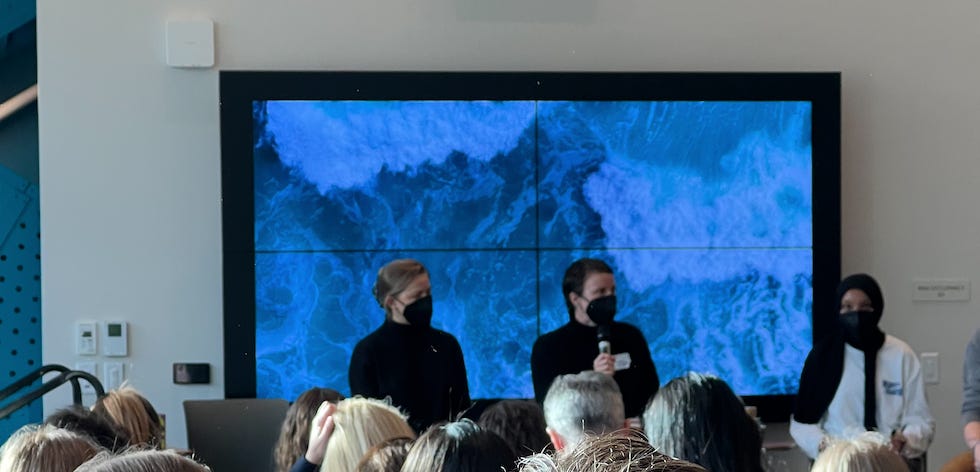
I drove Alicia’s car — watching the moss on the trees and Rainier to the South, Mount Baker to the North, the Cascading mountains to the East, and the Olympic peaks pass by me — to a high school campus where students had organized a conference on consent. Together with two other survivors and even more presenters, I was to spend the day sharing my story on a panel and in a workshop to help others understand The Incest Gap, as well as how and why I fell through it. But more importantly, we were to dream together about how to improve methods of incest prevention, intervention, recovery, and justice so the next generation of children could be safe, survivors and families could heal, and that those who harm could never do so again.
Shirkydra followed me as another workshop host who spoke to the students, parents, and professionals about setting boundaries. Claire came as an attendee and met my eyes from the stage as my anchor in the audience to encourage me as I shook through my speech. I began by educating the community about the complexity of memory while answering the question:
“What does it mean for me to hold the identity of survivor?”
I spoke of the differences between continuous memory, recovered memory, and non-narrative memory. How incest survivors and others who have had to hold too much serial trauma all at once because of state-based war or social injustice or intrafamilial violence, compartmentalize stories in their bodies like an old library. Some books fill the front shelves of the permanent collection to be processed throughout one’s lifetime. While others are archived only to be pulled out and recalled later in life. Then there are those that hide in basement cellars never to be remembered, while the library of the body continues to bear the weight of those tales that sit unread gathering dust and cobwebs.
I shared how my brain, body, and being have held all three types of memory. But that my survivor identity came to me with the return of the instances of incest by three men in my family, when I was finally free enough to receive the horror of my own history. Although today, Dissociative Amnesia — the condition when those who have lived experience of trauma forget what happened — is included in the DSM-5, a backlash led by the False Memory Syndrome Foundation (FMSF) in the early 1990’s tried to convince professionals and parents alike that adult survivors claiming recovered instances of intrafamilial child sexual abuse (ICSA) were liars.
The history of this pro-incest propaganda also sat in the streets of Seattle, as one of its main proponents was a teacher at the University of Washington. While one of its primary opponents was Lynn Crook, an incest survivor living in the area who won a civil lawsuit against her own father and wrote about the misrepresentation of that case to the media by that same UW professor in a book, “False Memories: The Deception that Silenced Millions.” Seattle-born and based author and filmmaker Mary Knight also shared her own story of recovered memories of incest and ritual abuse, as well as child sex trafficking, and interviewed Crook in the documentary, “Am I Crazy: My Journey to Determine if My Memories Are True.”
Any spark of an anti-incest movement from the second wave of feminism in the 70’s suddenly softened due to the lies of the FMSF. The word incest, once used openly to describe sexual abuse by family, became taboo and stigmatized, leaving children vulnerable to abuse, survivors and families alone in their healing, and people who harm free to reoffend. Unfortunately, this was not the first time in history that us survivors were robbed of our true memories. It was a trend.
In the early 20th century, Sigmund Freud and Josef Breuer interviewed a number of women suffering from symptoms of PTSD (then called Hysteria). They came to realize that the commonality between these women was child sexual abuse often at the hands of members of their families. Together, Freud and Breuer published their findings and waited to be celebrated for their discovery. But instead members of the aristocracy attacked the study, as many of them were actively perpetrating their own children. While Freud and Bruer had the opportunity to support the survivors, instead they too called the survivors liars. Their dismissal of survivors’ stories came to be called The Freudian Cover-Up by Florence Rush.
Fortunately, clients like Bertha Pappenheim — known under the pseudonym Anna O. in Freud and Breuer’s writings and credited for claiming the phrase “talk therapy” — traveled around Europe writing and speaking to help end the epidemic of sexual abuse. Her home country, Germany, remembered her with a postage stamp to celebrate the memory of her courage in combating the lies of the clinicians she tried to heal alongside.
And so, like Anna O. nearly 100 years ago, as well as Crook and Knight within this century, I stood on that stage that day and shared my recovered memories. I invited everyone to raise their hands if the word “incest” made them squirm. Many did, including me. Then I asked them to think about how I must feel as a survivor shaking on stage, as my body fought me when I tried to share the stories I had to keep secret for nearly three decades for my own safety. Then to imagine how much more uncomfortable children actively being incested by families must feel. The community received my message valiantly, applauding me just like a bride who had finally found the love of her life.
I said goodbye. Then met Jennifer, Mahina, Claire, and Shirkydra for dinner alongside a few other anti-incest activists in the alliance who lived nearby, including Mary Knight and Kelly Wallace. Together we sat and shared stories and french fries and burgers and beers, as we celebrated how far we have come as a movement, and dreamt excitedly about filling The Incest Gap.
I returned back to NYC in gratitude that my first paid opportunity to speak on such a large stage about my history serendipitously happened in Seattle. The place with the moss on the trees that taught me about interdependency, and the strength of intimacy grounded by the mountains, and the recovered memories of a city rebuilt by bodies after sex work, as well as exploitation. My former home from where constancy still calls me daily to check-in by old female friends who stood there to share in this moment with me: an incest survivor who could finally be celebrated as the truth teller I am. As we always have been, and we always will be.
Today, I hold precious those memories of my moments in Seattle. When I uncovered its history, as well as my own in the hands of community. Then had the paid opportunity to return as an anti-incest activist to take the stage to say, “My memories are true.” Then was intimately received by the residents of the Emerald City who finally said, “We believe you.”
For Sexual Assault Awareness Month, Incest AWARE is hosting the #TrueMemories Campaign, an idea born of Maria Socolof of 5WAVES, then executed by a number of members of the anti-incest alliance. Learn more about how you can share your story of recovered memories of all types of abuse. Or how you can support our movement by learning the literature of our history and attending virtual events.
Thanks for writing about dissociative amnesia and memories!